When you hear the term 'Roaring Twenties" you likely envision a glamorous woman. She wears a fringe dress and moves the Charleston, holding a long cigarette holder. But the 1920s fashion trends for women were approximately much more than party dresses. They were a affirmation of independence.
I have spent years studying fashion history, and the 1920s captivate me most. It wasn't a change in silhouette. It was a total modify of what a lady seem be. She cut her hair, raised her hemline, and ventured out of the Victorian shadows and into the light.
If you are looking for a direct that goes past the sparkle, this is for you. Let's look at the real trends, their importance, and the ways to get it them with clarity.
Why Everything Changed Overnight?
To get it what the fashion trends for women in the 1920s were, you have to get it the disposition of the minute. World War I had finished. The Spanish Flu had crushed the globe. Individuals felt tired of despondency and restriction.
Read Also: Top Fashion Influencers With Large Breasts Over 40
Women had ventured into men's employments amid the war. They drove trucks, worked in industrial facilities, and kept the world running. Once the battling finished, they denied to go back to the bodices their moms wore.
They needed to move. They needed to breathe. They needed to live. They called this new woman a flapper.
The Silhouette That Shocked the World
Before the 1920s, women’s fashion focused on bends. Bodices were tight, lifting the bust and narrowing the midsection. The mold patterns for ladies in the 1920s tossed all that out.
La Garçonne: The Boyish Shape
The French called it "La Garçonne"—"the boy" style. It was a deliberate move away from the maternal, curvy figure. Dresses hung straight from the shoulder to the hem. Waistlines dropped to the hips. For the first time, bras were designed to flatten the chest, not enhance it .
This was radical. Moms looked at their girls and stressed they were attempting to see like men. But the ladies of the twenties weren't attempting to be men.
They were attempting to be themselves. They needed the opportunity to raise their arms, to kick their legs, to move through the world without the cage of bone and steel around their ribs.
The Hemline Revolution
Perhaps nothing caused more gossip than the hemlines. For centuries, ankles were private. By the mid-1920s, dresses were skimming the knee.
Now, let me clear up a common myth: They weren't wearing mini-skirts. The hemline rose gradually. In 1922, it hit the mid-calf. By 1926, it hovered just below the knee.
But when a woman sat down or danced, well—that flash of knee was enough to make the older generation clutch their pearls.
To cover the legs that were now on display, women wore flesh-colored rayon stockings . Rayon was a new "artificial silk" that made stockings affordable for working girls.
The Flapper Look: Breaking Down the Details
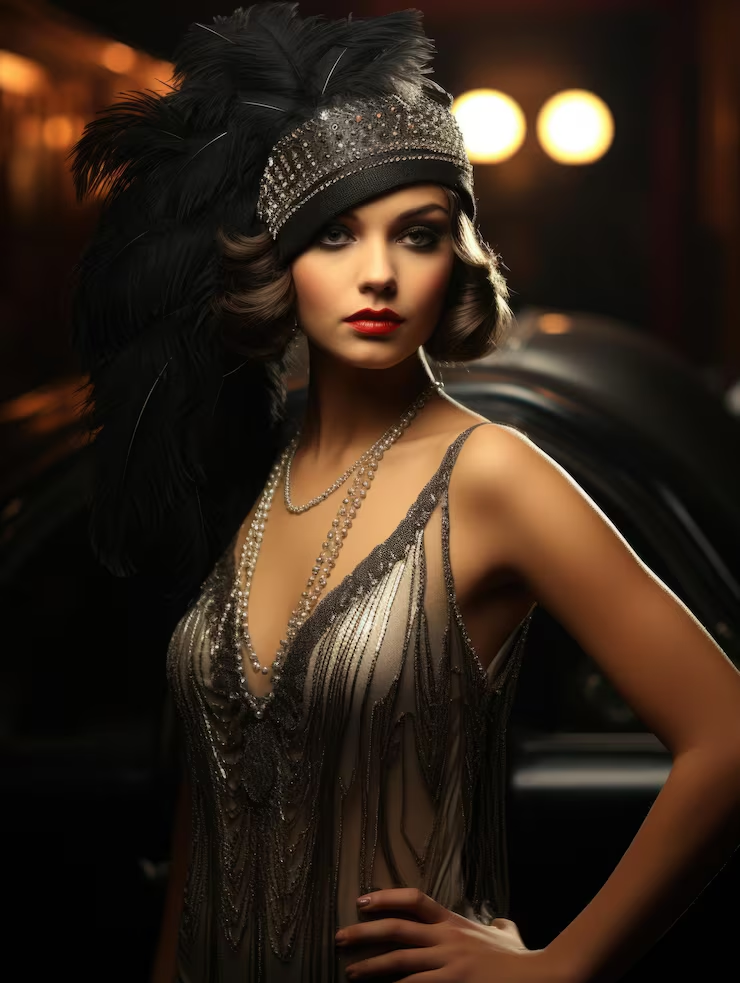
If you want to recreate a 1920s look, or simply understand it, you need to know the parts.
The Dress
Day dresses were simple. They often used shirt or cotton. They were cut free and brightened with geometric designs from the Craftsmanship Deco movement. You might see creases, cloth sews, or levels of texture that influenced as you walked.
You Must Also Like: Top 5 Legwear as a Unisex Fashion for All Genders
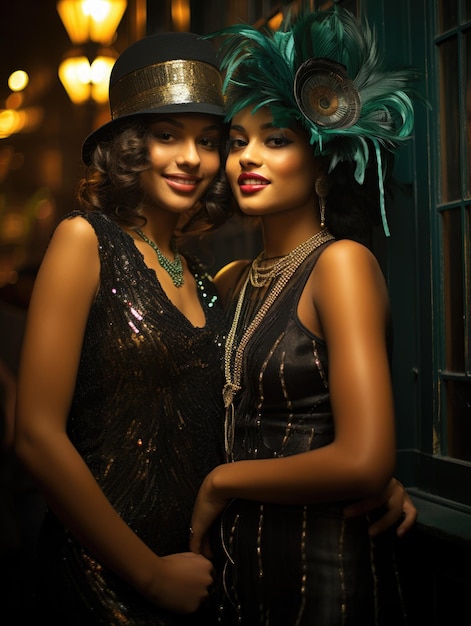
Evening dresses were where the fun started. They were still free, but they dribbled with beautification. Beadwork, sequins, periphery, and weaving turned a straightforward move into a sparkling articulation.
The periphery wasn’t about looks. It moved and changed with the Charleston, highlighting every shift.
The Hair
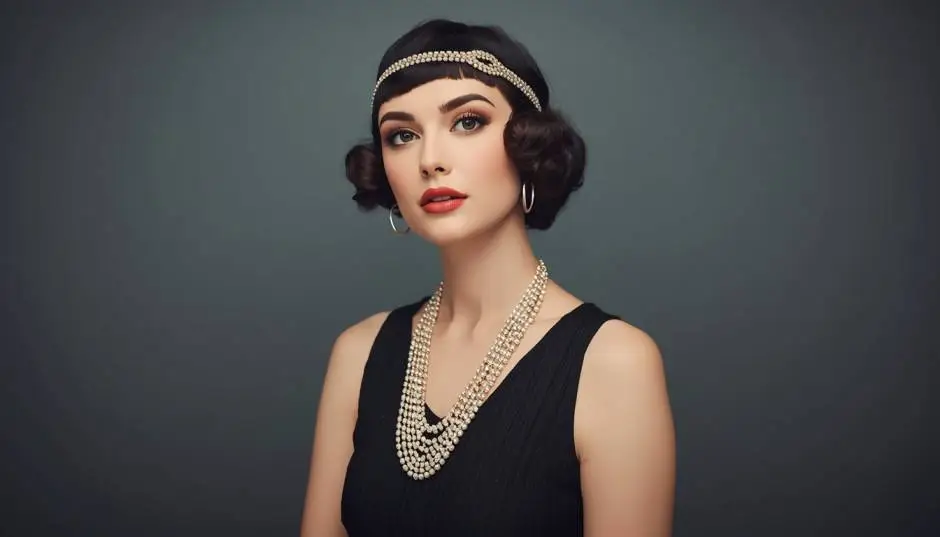
The bob was the defining hairstyle of the decade. Before the war, long hair was the standard. Cutting it short was shocking. Dancer Irene Castle cut her hair short in 1915 for practical reasons after a surgery, and the look caught on.
By 1926, Vogue declared, "The bob rules". Women started with a simple chin-length bob. Then they went shorter—to the "shingle" in the back, and at long last to the "Eton edit," which was practically pixie-short.
Silent film star Louise Brooks became a symbol of elegance. Her smooth, dark, geometric sway framed her face like a living Art Deco painting.
The Hat
If you had a weave, you required a cloche. This bell-shaped cap fit snugly over the head, embracing the unused brief hairstyles with perfect precision. Milliner Caroline Reboux designed it, making it the must-have accessory.
You pulled it down, regularly tilting it to one side to peer out from beneath the brim. For evening, the cap came off, and the headband went on. These items, commonly referred to as "bandeau," featured decorations of plumes, gems, or intricate beadwork.
The Accessories
-
Jewelry: Long pearl necklaces were iconic. They were often worn long enough to swing and sway while dancing . Art Deco influences brought geometric shapes, bold colors, and combinations of onyx, diamonds, and coral.
-
Shoes: Mary Janes and T-strap heels were the go-to choices . They were sturdy enough for dancing but stylish enough for evening.
-
Bags: Small, beaded purses held the essentials: a compact mirror, lipstick, and maybe a flask.
The Little Black Dress: Chanel's Gift to the World
We cannot conversation around 1920s fashion trends for women fashion without honoring the Small Black Dress. Before the 1920s, dark was for grieving. It was what you wore to funerals and amid periods of melancholy. It was not considered cheerful or fashionable.
In 1926, Coco Chanel changed that forever. Fashion distributed a outline of a basic, long-sleeved, dark crepe de chine dress that fell fair underneath the knee.
They called it "Chanel's 'Ford'"—comparing it to the Show T car since they accepted it was so straightforward, so culminate, that each lady would need one. They were right. The LBD became the uniform of the advanced lady.
It was flexible. You might dress it up with pearls for evening or wear it with a cardigan for day. It was reasonable to copy and lavish in its simplicity.
The Sportif Trend: Dressing for Action
Another major shift was the rise of sportswear. Ladies were playing sports—specifically tennis—and they required dress that moved. French tennis star Suzanne Lenglen was a design symbol in her possess right.
She wore short-sleeved, creased tennis dresses and a signature bandeau headband, outlined for her by couturier Jean Patou. This see spilled over into regular design.
Ladies begun wearing weaved sweaters, creased skirts, and indeed collar-and-tie combinations propelled by the tennis court. For the to begin with time, it was satisfactory to wear "sports dress" to lunch at a eatery. Casual wear was born.
The Alternative: The Robe de Style
Not each woman needed to see like a boy. For those who favored a milder, more sentimental see, architect Jeanne Lanvin advertised the Robe de Fashion.
This outline kept the dropped abdomen of the twenties but included a full, assembled skirt that some of the time indeed had panniers (hip extenders) like the 18th century.
It was floaty, diaphanous, and ultra-feminine. It appeared a bit of leg, but it kept up a princess-like quality that the flapper see rejected. It demonstrates that indeed in a decade of radical alter, there was room for assortment.
The Dark Side: The Look Came at a Cost
To give you a fully trustworthy guide, I have to mention the less glamorous side. The "boyish figure" wasn't just a fashion choice—it became a pressure. Women dieted and exercised to achieve a slim, hipless look.
Some wore "minimizer" undergarments to flatten their curves. The freedom from the corset was real, but it was replaced by a new pressure: to be thin.
Also, the glamor of the flapper often hid a painful reality. The decade was a reaction to trauma. People partied because they had seen death. The "roaring" was, in part, a collective effort to drown out the memories of war.
How to Wear 1920s Fashion Today?
If you are looking for buying guidance or practical advice for incorporating 1920s style into your life (for a themed event or just for fun), here is my honest take:
-
Go for the Silhouette, Not the Costume: A drop-waist dress is surprisingly flattering and comfortable. Look for modern interpretations that use the 1920s shape with contemporary fabrics.
-
Beading Quality Varies: If you buy a vintage-style flapper dress, check the beadwork. Cheap dresses use glue and plastic. Good ones use sewn beads and quality materials. If you want it to last, invest in better construction.
-
The Bob is High Maintenance: I learned this the hard way. Short hair in the back means frequent trims. If you aren't ready to commit, a good faux bob wig or a clever pin-up style can achieve the look for a night.
-
Comfort Matters: The original flapper clothes were designed for movement. When shopping, look for dresses that let you raise your arms and walk freely. That is the true spirit of the era.
Final Thoughts
The 1920s fashion trends for women were more than a style. They were a statement. Women looked at a world that had tried to confine them and said, "No more."
They danced in those fringe dresses. They drove cars in those cloche hats. They voted in those dropped-waist shifts. The clothes were the uniform of a liberation movement, stitched in silk and swinging with joy.
A century later, we still look back at that silhouette with wonder. It reminds us that sometimes, the most radical thing you can do is cut your hair, raise your hem, and dance like nobody is watching.
.