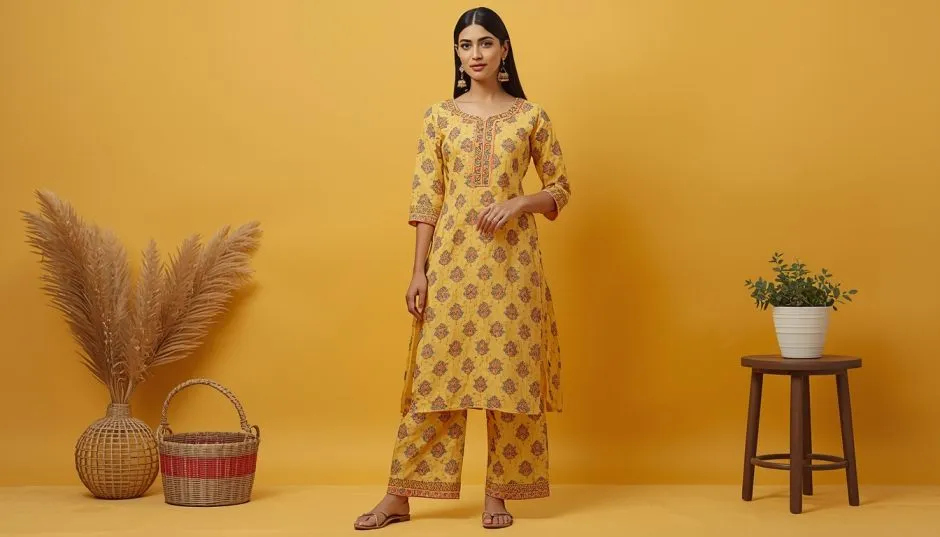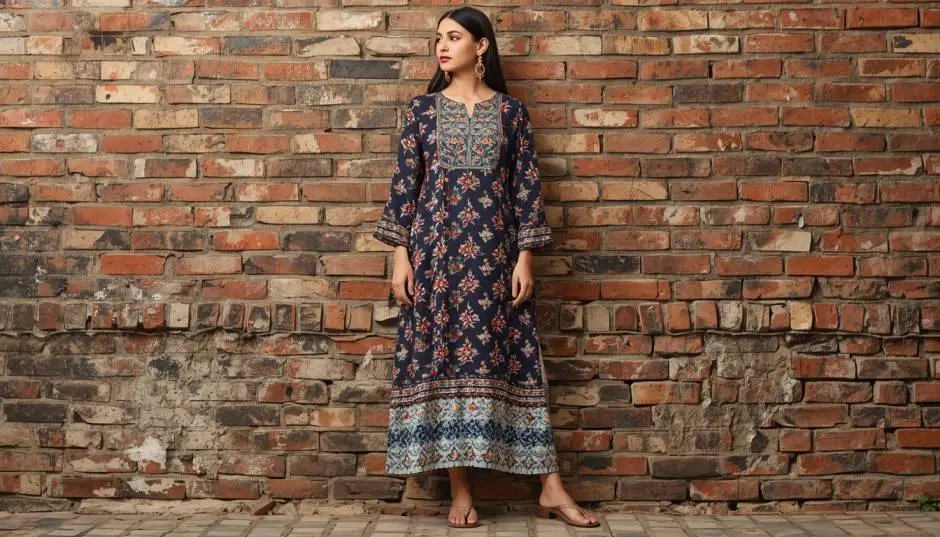
I bought my first block print maxi dress five years ago. A pink Jaipuri cotton one. Full sleeves. Tiny floral motifs. I wore it exactly once. Not because it was ugly. Because I made a terrible choice.
The fabric was stiff. The sleeves were too tight. And I did not know how to wash it. That dress now sits in my "learning pile." The pile of clothes that taught me lessons.
Since then, I have bought twelve more maxi dresses with Indian block prints. Some are amazing. Some are okay. A few are awful. This is not a promotional article. I will not tell you every Jaipuri cotton maxi dress with sleeves is perfect. Many are not.
Let me save you my mistakes.
What Are Maxi Dresses with Indian Block Prints?
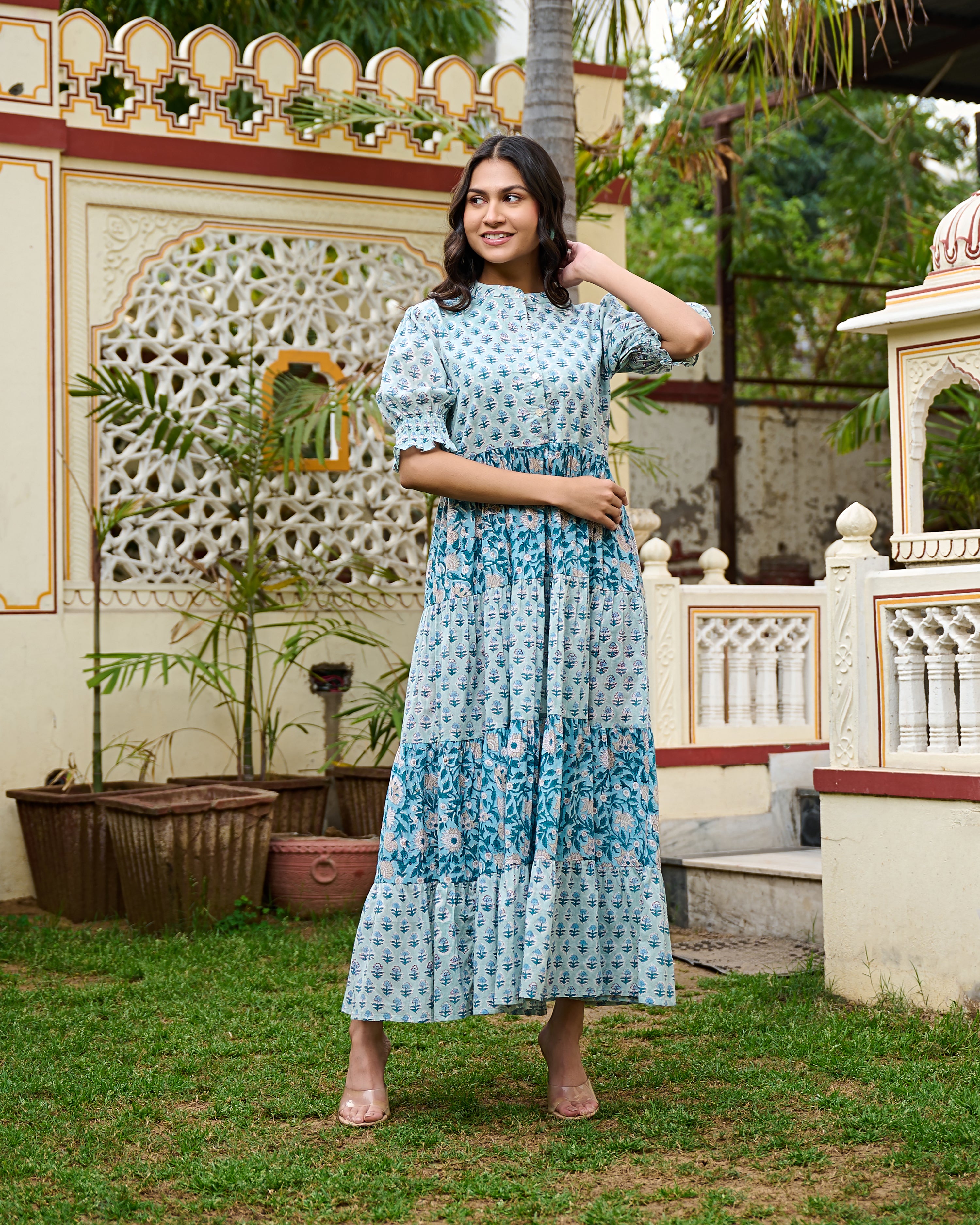
Let us start simple. A maxi dress is a long dress. It goes down to your ankles. Sometimes to the floor. Indian block printing is an old craft. Artisans carve designs into wooden blocks. Then they dip those blocks in dye.
Related Article: Short Kurta with Slit Pants: Trendy Ethnic Style Guide
And stamp them onto fabric by hand. Every single block print dress for women is slightly different. That is the beauty. And that is the problem. Because handmade means irregular. Some prints are faint.
Some lines are crooked. Some colours bleed. You need to know what is acceptable. And what is just poor quality.
Why This Trend Is Growing in 2026?
I have watched this trend evolve. Here is why cotton maxi dress for women with block prints are everywhere now.
1. People want breathable clothes
Synthetic fabrics are out. After years of polyester, women are choosing cotton. Block print cotton maxis let your skin breathe. Even in 40 degree heat.
2. They hide imperfections
A solid colour maxi shows every bump. Every sweat patch. Every wrinkle. But a block print has visual texture. The prints hide a lot. I wear mine on bloated days. Nobody knows.
3. One outfit, zero thinking
You do not need to match a top with pants. You do not need a dupatta. You just put on the dress. Add earrings. Done.
This is why Jaipuri hand block print dress materials are selling out. Women are tired of complicated outfits.
The Different Types (Real Names You Need to Know)
Shopkeepers will throw many terms at you. Here is what they actually mean.
Jaipuri Cotton Maxi Dress with Sleeves
This is the classic. From Rajasthan. Soft cotton. Hand block printed. Usually comes with full sleeves or three-quarter sleeves. The real Jaipuri cotton maxi dress with sleeves has a loose fit.
It is not body hugging. That is intentional. It is meant for hot weather.
Best for: Summer days, vacation, work from home.
Avoid for: Evenings out. The fit is too casual.
Bagru Print Maxi
Bagru is a town near Jaipur. Their prints are different. They use natural dyes. Mostly black and red on cream fabric. The designs are geometric. Not floral.
I own one Bagru print maxi. The fabric is thicker than Jaipuri cotton. Feels more substantial.
Best for: Cooler evenings, art events, casual Fridays.
Avoid for: High humidity. The thicker fabric gets heavy.
Sanganeri Print Maxi
Sanganeri prints have fine lines. Lots of detail. Usually floral. White background with bright colours. Beautiful to look at. But here is the catch. The fine lines mean more dye. More dye means more bleeding in the wash.
Best for: Photography, weddings, dressy occasions.
Avoid for: Daily wear. Too delicate.
Dabu Print Maxi
Dabu is a mud resist printing technique. The designs have a cracked, textured look. Very earthy. Very boho. My Dabu maxi is my favourite. The fabric is soft. The print is unique. And it hides stains like magic.
Best for: Travel, beach vacations, music festivals.
Avoid for: Office. Too casual.
Honest Pros and Cons (From Someone Who Owns Too Many)
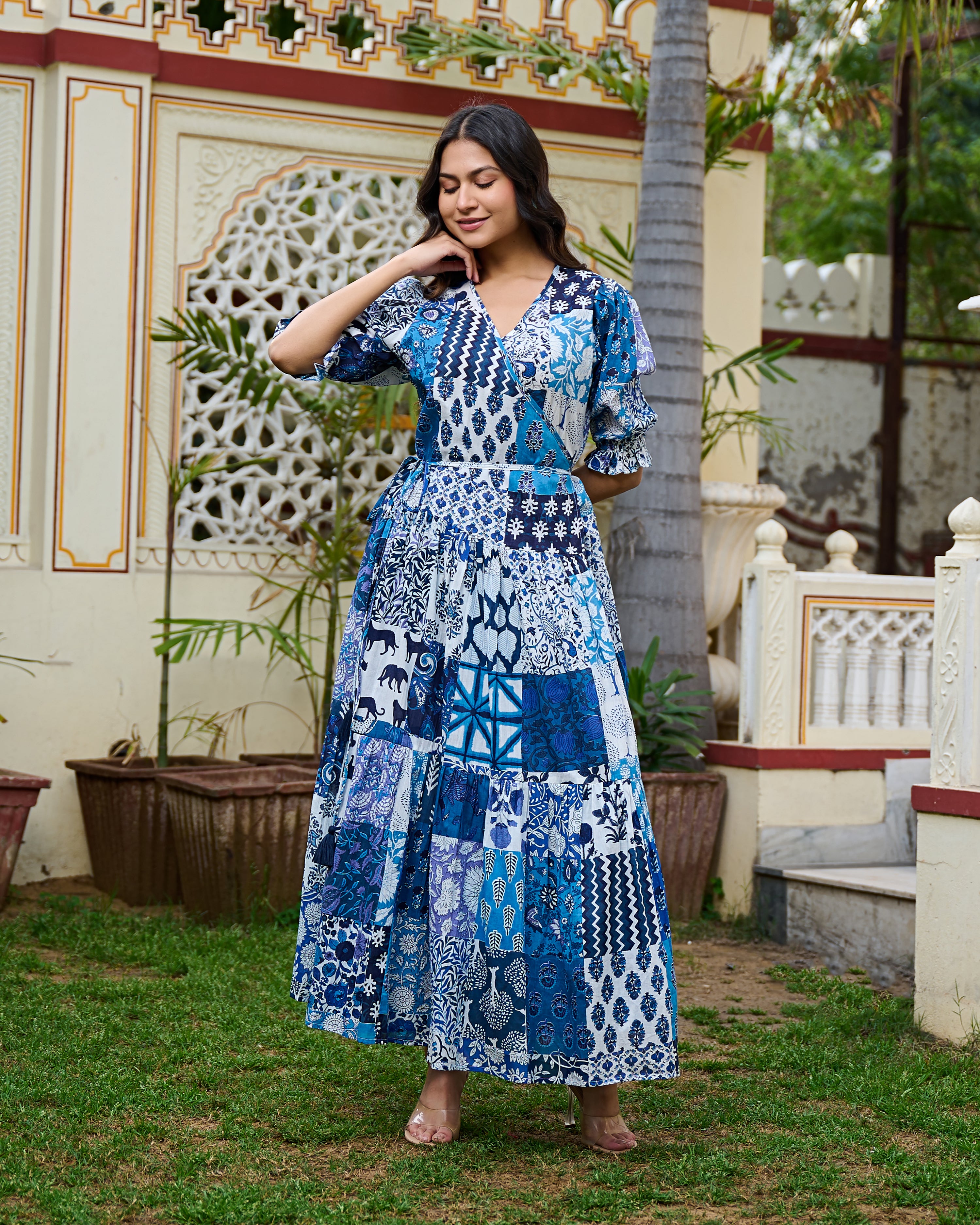
I wear block print maxis at least three times a week. Here is the real truth.
The Pros:-
-
No ironing required – Seriously. The natural wrinkles of cotton look intentional with block prints. I hang mine to dry. That is it.
-
Gets softer with every wash – Unlike synthetic dresses that pill, good cotton maxi dress for women becomes nicer over time. My oldest one feels like a worn bedsheet. In a good way.
-
Works on many body types – The loose cut flatters almost everyone. Petite? Wear wedges. Tall? You are lucky. Plus size? The A-line shape is forgiving.
-
Supports real artisans – When you buy from the right place, you are paying a crafts person directly. Not a factory machine.
The Cons:-
-
Colour bleeding is real – The first three washes will release colour. Red and blue bleed the most. You must wash separately. I learned this after turning a white towel pink.
-
Inconsistent sizing – Because these are handmade, two dresses from the same shop can fit differently. One might be loose. One might be tight. Always check the return policy.
-
Sun fades the print – Direct sunlight destroys block prints. My friend hung her dress on a terrace line for a week. The side facing the sun turned pale. The other side stayed dark.
-
Sleeves can be tight – Many Jaipuri cotton maxi dress with sleeves have narrow armholes. This is a traditional cut. If you have larger arms, size up or look for sleeveless versions.
How to Spot a Quality Block Print Dress?
Do not trust product descriptions. Trust your eyes and hands. Here is my checklist. I have used this for years.
You Must Also Like: Sonakshi Sinha Casual Outfits: Easy Chic Style Ideas
1. The Smell Test
Real hand block printing uses natural dyes. Natural dyes smell like earth. Or like nothing. Cheap prints use chemical dyes. They smell like a factory. Like kerosene. Or strong perfume.
If a dress has a chemical smell, return it. That smell does not go away after washing.
2. The Backside Check
Flip the dress inside out. A genuine Jaipuri hand block print dress materials will show the print on the inside too. Faintly. Because the dye soaks through the fabric.
If the inside is completely white, the print is only on the surface. That means it will fade quickly.
3. The Stretch Test
Pull the fabric gently. Good cotton has some give. It stretches slightly and returns. Cheap cotton is stiff. It does not stretch. It will also shrink in the wash. I learned to avoid "hard finish" cotton.
4. The Alignment Test
Look at the side seams. Do the prints match up? On expensive dresses, the artisan matches the print at the seams. On cheap dresses, the print cuts off awkwardly.
Matching prints is hard work. It costs more. But it looks much better.
Trendy Styles for 2026
Let me tell you what is actually selling and wearing well this year.
The Full Sleeve Floor-Length Maxi
This is the Jaipuri cotton maxi dress with sleeves that everyone wants. Full sleeves down to the wrist. Dress down to the ankle. High neck or scoop neck.
Why it is trending: It covers everything. Perfect for women who want modesty without looking frumpy. Also great for air conditioned spaces.
I wore this to a winter wedding. Paired with a black shawl. Got four compliments.
The Side Slit Maxi (Yes, Again)
Block print maxis with thigh-high side slits are new for 2026. The slit lets you walk freely. And shows a flash of leg. But warning. Do not wear this to a family function. The slit rides up when you sit. I wear mine only for beach dinners or date nights.
The Reversible Block Print Maxi
This is clever. The dress is stitched so both sides look finished. You wear it one way today. Flip it inside out tomorrow. Different print. Different look.
I own one reversible maxi. The prints are different on each side. It feels like two dresses for the price of one.
The Layered Maxi (With Jacket)
Some brands now sell a block print maxi with a matching short jacket. The jacket is unlined. Lightweight. You can wear it over the dress or remove it.
Honest opinion? The jacket is useless. It adds bulk. It wrinkles easily. I never wear mine. Just buy the dress alone.
Outfit Ideas That Actually Work
Stop overcomplicating. Here are three looks I wear weekly.
Look 1: Everyday Casual
Take a block print dress for women in a medium print (not too bold, not too small). Add white sneakers. A canvas tote bag. Sunglasses. That is it. No jewellery. No dupatta. No layering.
Why this works: The dress is the statement. Everything else is background.
Look 2: Office Appropriate
Pick a maxi with a higher neckline. Full sleeves. Small, repeated print (nothing too loud). Add a structured blazer. Closed toe flats. A watch. The blazer makes the dress look intentional. Not like you are going to the beach.
I wear this to client meetings. No one has ever said it is too casual.
Look 3: Festive / Wedding Guest
Choose a maxi with gold block printing. Or a bright colour like maroon or mustard. Add silver jhumkas. Kolhapuri heels. A potli bag. Keep the dupatta at home. You do not need it. The maxi is long enough.
I wore this to a friend's engagement. Three other women asked where I bought it.
Cotton Maxi Dress for Women (Fabric Deep Dive)
Not all cotton is the same. Let me break this down.
Jaipuri cotton – Soft. Lightweight. Semi-sheer (you need a slip underneath). Best for heat.
Mulmul cotton – Even softer than Jaipuri. Also called muslin. Very delicate. Tears easily. Hand wash only.
Handloom cotton – Thicker. More durable. Has a slight texture. My personal favourite.
Khadi cotton – The heaviest. Hand spun. Expensive. But lasts for years.
If you are buying your first cotton maxi dress for women, choose handloom cotton. It is the best balance of softness and durability.
Jaipur Hand Block Print Dress Materials
Many women buy fabric instead of ready dresses. Especially in Jaipur.
Jaipur hand block print dress materials usually come as 5.5 meters of fabric. Enough for a maxi dress. Sometimes with a matching dupatta piece. Why buy fabric?
-
You control the fit. Get it stitched to your exact measurements.
-
You choose the sleeve length. Neckline. Slit depth.
-
It is often cheaper than a designer dress.
But there is a catch. You need a good tailor. Not every tailor understands block print fabric. The fabric stretches differently than regular cotton. The prints need to be matched at the seams.
I bought fabric once. Gave it to my local tailor. He ruined it. The side seams did not match. The print looked crooked. So only buy fabric if you have a trusted tailor who has worked with block prints before.
Washing and Care (So Your Dress Lasts Years)
This is the most important section. Read twice.
First Wash (Crucial)
-
Soak the dress in cold water with salt. One tablespoon of salt per litre of water. Salt sets the dye.
-
Leave for 30 minutes. The water will turn colour. That is normal.
-
Rinse with cold water until the water runs clear.
-
Do not use soap on the first wash.
Regular Washing
-
Hand wash only. I am serious. Machine washing ruins block prints.
-
Use mild detergent. Not harsh soap.
-
Wash dark colours separately for at least five washes.
-
Never soak for more than 10 minutes. The dye will keep bleeding.
-
Do not wring or twist. Squeeze gently.
Drying
-
Dry in shade only. Never direct sunlight.
-
Hang from the shoulder seams. Not from the neckline. The weight of wet fabric stretches the neck.
-
Do not use a dryer. The heat shrinks cotton permanently.
Ironing
-
Iron on the reverse side.
-
Use medium heat. Not high.
-
Do not iron directly over the print. It flattens the raised texture.
My oldest block print maxi is three years old. It still looks good. Because I follow these rules.
Common Mistakes (And How to Fix Them)
I made every mistake possible. Learn from me.
Mistake 1: Buying the wrong length
Maxi dresses should not drag on the floor. They collect dirt. They trip you. The correct length is one inch above the floor when you wear your tallest shoes.
If your dress is too long, get it hemmed. Do not wear heels to compensate. You will be uncomfortable all day.
Mistake 2: Ignoring the slip
Jaipuri cotton is semi-sheer. In sunlight, people see your legs through the fabric. Wear a cotton slip underneath. Knee length or full length.
I use a nude coloured slip. White shows through. Black is too dark.
Mistake 3: Over-accessorizing
A block print is already busy. Do not add a heavy necklace. Do not add bangles on both arms. Do not add a belt (the dress is not meant to be cinched).
Just wear earrings. That is enough.
Mistake 4: Wearing the wrong bra
Thin cotton shows bra outlines. Seamless bras only. Or bralettes. No padded or lacy bras. The texture shows through.
Where to Buy (Experience-Based)?
I am not sponsored. These are just places I trust.
For budget (under ₹1500): Amazon or Myntra. Search for "Jaipuri cotton maxi dress." Read one-star reviews. Ignore five-star ones. Look for reviews that mention fabric thickness and colour bleeding.
For mid-range (₹1500 - ₹4000): Jaypore, Nicobar, or Okhai. Their quality is consistent. Okhai is especially good because they work directly with artisans.
For premium (above ₹4000): Anokhi (if you find a sale) or Raw Mango. Anokhi's block prints are legendary. But expensive. Wait for end of season sales.
For fabric only: Visit Jaipur's Bapu Bazaar. Or buy online from Gaatha or iTokri. Both are reliable.
One warning. Do not buy block print dresses from fast fashion brands like H&M or Zara. They use machine prints. Not hand blocks. The quality is different. The fabric is synthetic blend. You will be disappointed.
The Final Thoughts
Yes. Absolutely yes. But with conditions. Buy them for summer. For casual days. For travel. For work from home. Do not buy them for formal events. Do not buy them if you hate hand washing. Do not buy them if you want a perfect, uniform print.
The imperfections are the point. The slightly uneven lines. The faint spots. The unique variations. That is what makes hand block printing special. My recommendation for first-time buyers:
Buy one Jaipuri cotton maxi dress with sleeves in a medium blue or green print. Mid-range price. Wash it carefully. Wear it for a week.
If you love how soft it becomes, buy another. If you hate the maintenance, at least you tried. And you only spent a little money. Either way, you now know more than most shoppers. Go make a smart choice.
Frequently Asked Questions
Do block print dresses shrink?
Yes. Cotton shrinks about 5-7% on the first wash. Buy one size larger. Or buy pre-shrunk fabric (the product description will mention it).
Can I wear a block print maxi in winter?
Yes. Layer with a turtleneck underneath. Add boots and a long coat. The cotton is not warm on its own.
Are these dresses suitable for petite women?
Yes. But look for maxis with smaller prints. Large prints can overwhelm a small frame. Also consider hemming the length.
How do I remove stains from block print fabric?
Act fast. Cold water and gentle soap. Do not scrub. Dab gently. Never use bleach. Bleach destroys natural dyes completely.
Can men wear block print maxis?
The dresses are designed for women's bodies. But fashion has no rules. If you like it, wear it. Just check the fit around the chest and shoulders.
.